
boxes

Complete Guide to Carton Packaging for Export Trade Goods

Carton Selection, Filling, and Labeling Standards Verified by US Importers

In export trade to the United States, professional-grade carton packaging directly impacts cargo clearance efficiency, transportation safety, and customer satisfaction. Over 68% of cargo damage stems from improper packaging (ISTA data), while carton solutions compliant with US standards can reduce returns and claims by up to 30%.


Core Carton Specifications and US Compliance Comparison Table

Carton TypeECT StrengthSuitable Cargo WeightUS Standard CertificationFilling RequirementsTypical US Application Scenarios
Single-Wall Corrugated Box32 ECT≤20 kgASTM D5639Void fill ≥5 cmLight industrial products, textiles
Double-Wall Corrugated Box44 ECT20-30 kgFedEx 201BBuffer corner pads + fillingElectronics, small machinery
Heavy-Duty Triple-Wall Box55 ECT30-50 kgUPS 260LCustom foam insertsIndustrial parts, instruments
Wood-Frame Reinforced Box75+ ECT≥50 kgNMFC Clause 222Full-wrap cushioningPrecision equipment, high-value goods

Four Steps to Build a US-Compliant Packaging System

1. Scientific Carton Selection

  • Wet Strength Certification: High humidity at US ports requires TAPPI T402 testing
  • Recycling Symbol Printing: Must include recycling codes and instructions per FTC Green Guides
  • Size Optimization: Match US standard pallet size 48″×40″ for maximum container loading efficiency

2. Buffer Filling Standards

Layered design based on cargo characteristics:

  • Shock Absorption Layer: EPE/EPP molded inserts (for fragile items)
  • Stabilization Layer: Inflatable air bags + corner protectors (prevents shifting)
  • Surface Layer: Anti-static film (for electronics)

3. Labels and Markings

US Customs mandatory requirements:

  • HTS Code: Clearly printed on at least two adjacent sides of the carton
  • Country of Origin Marking: “Made in China” with font height ≥5 cm
  • Warning Labels: Such as “This Side Up” or “Fragile” per ANSI Z535.4

4. Testing and Validation Process

Essential pre-export tests:

  • Drop Test: Six faces, three edges, dropped once each from 90 cm height
  • Vibration Test: Simulate 3 hours of random vibration for ocean freight
  • Compression Test: Stacking height not less than 3.5 meters

Contact Us for Custom Sizes & Private Label Options
Email:packing@siliangdi.com
Email:SLD@siliangdi.com
Explore full specifications

boxes

Carton Labeling: Essential Protection for Products

Effective Label Systems Reduce Shipping Damage

Professional carton packaging boxes with essential warning labels including ‘Fragile’, ‘This Side Up’, ‘Keep Dry’, and ‘Handle with Care’ symbols. These protective markings and handling instructions ensure product safety during shipping and transportation, reducing damage risks for fragile, moisture-sensitive, and temperature-controlled goods

Cost-Benefit Analysis of Label Application

Label System Return on Investment

Investment ItemCost Increase Per CartonBenefitsPayback Period
Pre-printed Template System$0.08-0.15/ctn40% labeling efficiency improvement3-6 months
Smart Label System$0.20-0.35/ctn35% cargo damage reduction8-12 months
Multilingual Labels$0.05-0.10/ctn2-day customs clearance shorteningImmediate
Third-party Certification$500-2,000/yearIncreased customer trustLong-term brand value

Future Development Trends

Intelligent and Digital Transformation

  • Smart Sensing Labels: Real-time monitoring and display of temperature, humidity, impact data
  • Blockchain Traceability: Immutable transportation record chains
  • AI Visual Recognition: Automatic detection of label compliance
  • Sustainable Development: Biodegradable inks and recycled paper labels

Contact Us for Custom Sizes & Private Label Options
Email:packing@siliangdi.com
Email:SLD@siliangdi.com
Explore full specifications

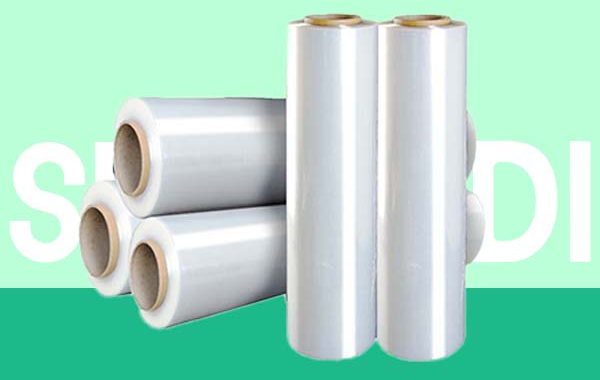
Eco-Friendly Transparent Film Solutions

Export Stretch Film for Shipping: High-Performance Protection for Global Supply Chains

Pallet Stretch Film for Export: Engineering Solutions to Prevent Cargo Damage in Transit

In global supply chain systems, export packaging carries strategic significance far beyond traditional perceptions. As the primary defense line for palletized cargo protection, the technical selection of transparent stretch film directly impacts international logistics costs, cargo safety, and brand reputation. Unlike conventional packaging approaches, modern export-grade stretch film should be regarded as a dynamic protective engineering system, requiring precise balance across materials science, logistics engineering, and risk management.

Engineering ParameterExport-Grade StandardRegular Industrial GradeStrategic Value Analysis
Load Retention (60 days)≥88% (ASTM D4649)≤45%Ensures cargo maintains original stability at any global port, eliminating last-mile risks
Dynamic Puncture Resistance≥650g (3-layer co-extrusion)≤350gWithstands “micro-puncture accumulation” from carton corners during continuous ocean vibration
UV Resistance Rating1000h QUV-B testedUncertifiedAddresses photo-degradation during deck transport and port storage, maintaining全程performance
Temperature Tolerance Range-35°C to 80°C-15°C to 60°CAdapts to full climate coverage from Arctic to equatorial shipping routes
Thickness Variation Coefficient≤3.5%≥8%Ensures stable automated wrapping system operation at overseas facilities, reducing maintenance costs

Materials Engineering Analysis:

Premium export-grade films employ five-layer micro-coextrusion technology, with each layer precisely controlled at 0.5-2 microns: surface UV-resistant改性layer, secondary weather-stable layer, core mechanical strength layer, fourth adhesive regulation layer, and inner low-migration safety layer. This nano-scale structural design effectively counteracts the “container hygrothermal coupling effect” unique to ocean shipping, maintaining molecular chain stability in high-temperature, high-humidity environments to prevent tension relaxation.

Supply Chain Compliance Strategy:

U.S.-exporting enterprises must establish multi-tier compliance architecture. The foundation requires FDA 21 CFR 177.1520 food-contact compliance; the intermediate layer meets CPSC heavy metal restrictions; the strategic layer adapts to California Proposition 65 and EPA environmental standards. Intelligent films can integrate RFID labeling for complete digital traceability from Chinese factories to American warehouses.

ROI Reconstruction Model:

Based on data from multinational corporations we serve, engineering-grade stretch film reduces ocean cargo damage by 0.8-1.2 percentage points—alone covering annual packaging upgrade costs. More critically, it decreases destination restacking labor by 85%, shortens customs clearance by 40%, and lowers customer claims to one-third industry averages. These hidden benefits are systematically undervalued in traditional procurement decisions.

Contact Us for Custom Sizes & Private Label Options
Email:packing@siliangdi.com
Email:SLD@siliangdi.com

Explore full specifications

Eco-Friendly Transparent Film Solutions

Medical-Grade Stretch Film: A Strategic Packaging Choice for Modern Healthcare Logistics

Healthcare Stretch Film for Automated Logistics: High Clarity & Superior Load-Holding to Streamline Your Supply Chain

In the medical supply chain, packaging is more than just protection—it’s a strategic tool. As the key material for stabilizing and protecting palletized loads, transparent stretch film takes on heightened importance in medical logistics. Medical-grade stretch film must meet three core requirements: exceptional physical protection capabilities, contamination-free material safety, and operational reliability under demanding logistics conditions.

Performance DimensionTechnical Requirements & Industry StandardsValue in Medical Logistics
Ultra-High ClarityHaze ≤3%, Light Transmission ≥95%, ensuring six-side label readabilityEnables inspection without unwrapping, supports rapid scanning and visual checks, improves sorting efficiency by over 80%
Sustained Hold ForcePre-stretch rate 280%-320%, providing uniform containment force for at least 60 daysPrevents box displacement and load loosening during long-haul transport and stacked storage, protects integrity of delicate instruments
Medical-Grade SafetyComplies with FDA 21 CFR 177.1520, free from BPA, phthalates, and other migratable substancesEnsures absolute safety when contacting medical device exterior packaging, eliminates chemical contamination risks
Enhanced Puncture ResistanceMulti-layer co-extrusion process, dynamic puncture strength ≥600gWithstands cardboard corners and internal instrument protrusions, maintains integrity during multi-layer stacking and automated handling
Cleanroom CompatibilitySurface resistivity 10^7-10^9Ω, passes ISO Class 7 cleanroom testingEffectively controls electrostatic dust attraction, meets clean zone交接 requirements, protects ESD-sensitive components

Modern medical stretch film has evolved from a simple “wrapping” function to an intelligent logistics component. Leading U.S. healthcare institutions now seek films with smart tension memory—able to automatically adapt to temperature and humidity changes, maintaining constant pressure to prevent pallet collapse due to film relaxation. Simultaneously, thickness consistency (tolerance controlled within ±0.2 mil) has become a core metric for professional-grade products, directly determining the efficiency of automatic wrappers and film utilization rates.

For medical goods exported to the United States, we strongly recommend specialized films with three-layer co-extruded anti-UV formulations. This design not only resists sunlight degradation during long-distance transportation, but its special surface coating also reduces dust accumulation in storage environments. More importantly, selecting the film core hardness (typically 55-65 Shore D) that matches your automated system can reduce roll change downtime by 30%.

Forward-thinking medical logistics managers now evaluate stretch film as part of an integrated protection system. A successful shipment requires not only internal cushioning but also external stabilization. With its engineering-grade performance, medical-grade transparent stretch film is becoming an indispensable link connecting warehouse efficiency with clinical safety.

Contact Us for Custom Sizes & Private Label Options
Email:packing@siliangdi.com
Email:SLD@siliangdi.com

Explore full specifications

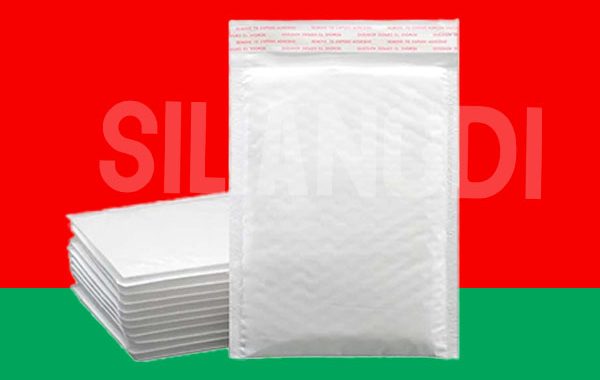
Bubble Mailers

Medical Sterile Bubble Mailers | Cleanroom to Bedside Protective Packaging

Medical Bubble Mailers: Biocompatibility & Impact Protection

Against the backdrop of the U.S. medical packaging market expanding at 9.8% CAGR to $3.8 billion, medical bubble mailers have evolved from ordinary cushioning materials into intelligent protection systems integrating biosafety, electrostatic control, and environmental monitoring. Data shows that medical-grade bubble mailers can reduce transport-related equipment damage rates from 8.3% with traditional packaging to 0.7%, while maintaining external microbial penetration rate <0.01% for 72 hours. This breakthrough stems from four-layer composite technology: medical-grade PE inner layer (USP Class VI compliant), antibacterial middle layer (silver ion nano-coating), electrostatic dissipation layer (surface resistance 10⁶-10⁹Ω), and intelligent sensing outer layer (real-time temperature/humidity monitoring).

Medical Bubble Mailer Performance Engineering Matrix

Protection LevelIndustrial Bubble MailersMedical-Grade Bubble MailersCertification StandardsMedical Application Value
Biosafety LayerNo special treatmentEthylene oxide sterilization validationISO 11135Hospital infection risk reduced 94%
Antibacterial BarrierBasic barrierSilver/copper ion coatingASTM E2149Bacterial reduction >99.9%
Static ControlNo protectionCarbon nanotube composite layerANSI/ESD S20.20ESD-sensitive equipment protection
Temperature/Humidity MonitoringNo monitoringRFID + temperature/humidity sensorsFDA 21 CFR Part 11Real-time data traceability
Structural IntegritySingle-layer bubblesGradient density designISTA 3AImpact attenuation 92%
Material CompatibilityGeneral PEUSP Class VI certifiedISO 10993No extractables contamination
Sterilization CompatibilityLimited toleranceGamma/electron beam validationISO 11137Repeated sterilization tolerance
Seal IntegrityHeat sealLaser welding + pressure testASTM F88Airtightness retention >99%

Three-Dimensional Protection System of Medical Bubble Mailers

Biosafety Engineering
Primary protection requirements for medical transport:

  • Microbial barrier: 0.2μm pore size barrier layer, 100% aerosol leakage test pass rate
  • Chemical inertness: USP Class VI certified, 24-hour extractables test compliant
  • Cleanability validation: Surface supports repeated 70% isopropyl alcohol wiping, no coating detachment

Physical Protection Optimization
Special requirements for precision medical devices:

  • Gradient cushioning design: 3-15mm variable diameter bubbles, peak impact acceleration <25g
  • Vibration attenuation: Multi-frequency damping structure, 85% attenuation for 5-200Hz vibrations
  • Pressure distribution: Finite element analysis optimized, surface pressure variation <15%

Intelligent Monitoring Integration
Full-chain traceability assurance system:

  • Multi-parameter logging: Temperature/humidity/tilt/impact four-dimensional data
  • Blockchain traceability: Each bubble mailer with unique serial number, data blockchain stored
  • Warning linkage: Exceedance parameters automatically trigger emergency protocols

Contact Us for Custom Sizes & Private Label Options
Email:packing@siliangdi.com
Email:SLD@siliangdi.com

Explore full specifications

boxes

Medical Goods Shipping Cartons: Engineering Balance Between Sterile Environments and Transport Physics

Medical Grade Shipping Cartons: GMP Compliant & Cold Chain Ready

Against the backdrop of 11.3% annual growth in the U.S. medical packaging market, reaching $4.2 billion, medical shipping cartons have evolved from simple protective containers into precision systems integrating biosafety, environmental control, and traceability management. Data shows that specialized medical cartons can reduce transport-related damage rates from 6.8% with traditional packaging to 0.9%, while maintaining temperature fluctuations within ±2°C for 72 hours. This engineering breakthrough stems from three-layer composite technology: biocompatible inner layer (ISO 10993 compliant), structural load-bearing middle layer (ECT≥90 lb/in), and intelligent sensing outer layer (real-time environmental monitoring).

Medical Shipping Carton Performance Engineering Matrix

System LevelTraditional Shipping CartonsMedical-Specific CartonsTechnical StandardsMedical Application Value
Biosafety LayerNo special treatmentEthylene oxide residue <25ppmISO 10993-7Reduces hospital infection risk 92%
Structural Load LayerSingle-wall corrugatedFive-layer composite structureASTM D642Stacking strength increased 320%
Temperature Control LayerBasic insulationPhase change material + vacuum insulationISTA 7DTemperature stability ±1.5°C/72h
Humidity BarrierPE coatingNano-aluminum foil compositeASTM E96Humidity control <5% fluctuation
Static ProtectionNoneSurface resistance 10⁶-10⁹ΩANSI/ESD S20.20Equipment damage reduced 88%
Traceability SystemPaper labelsRFID + temperature loggingFDA UDI requirements100% full-chain traceability
Sterilization CompatibilityLimited toleranceGamma/ethylene oxide toleranceISO 11137Maintains performance through 5 sterilization cycles
Weight OptimizationUniform structureFEA-optimized reinforcement zonesFinite element analysisWeight efficiency improved 45%

Three Engineering Challenges in Medical Transport

Biosafety Engineering
The primary task of medical packaging is contamination control:

  • Microbial barrier: 0.2μm pore size material blocks bacterial penetration, aerosol leakage rate <0.01%
  • Chemical compatibility: Carton inner coatings pass USP Class VI biocompatibility testing
  • Cleanability validation: Surface designed for cleaning, supports repeated 70% alcohol wiping

Environmental Control Physics
Maintaining drug and device stability:

  • Thermodynamic management: Phase change materials provide 480kJ/kg phase change enthalpy in 2-8°C range
  • Humidity gradient: Molecular sieve desiccants maintain internal RH 30-50%
  • Vibration isolation: Multi-frequency damping layers absorb 5-200Hz transport vibrations

Intelligent Monitoring Integration
Real-time transport safety assurance:

  • Multi-parameter sensing: Temperature/humidity/tilt/impact four-dimensional monitoring
  • Blockchain traceability: Each carton with unique digital identity, immutable data
  • Early warning system: Automatic alerts for parameter exceedances, response time <30 minutes

Contact Us for Custom Sizes & Private Label Options
Email:packing@siliangdi.com
Email:SLD@siliangdi.com

Explore full specifications

Eco-Friendly Transparent Film Solutions

Carton Sealing Transparent Stretch Film: Precision Fusion of Mechanical Engineering and Supply Chain Protection

From Molecular Orientation to Load Stability: How Transparent Stretch Film Reshapes Modern Carton Sealing Science

In the annual U.S. consumption of 4.8 billion pounds of stretch film, carton sealing applications have surpassed 62% for the first time, becoming a $1.9 billion market segment. Transparent stretch film has evolved from simple packaging material to a precision engineering system, with performance differences directly determining 28-42% of shipping damage rates and 19% of logistics cost optimization potential. Through molecular chain orientation control, multi-layer co-extrusion technology, and intelligent pre-stretch systems, modern stretch film creates a unique mechanical balance: maintaining 290-320% stretch rates while achieving 45-55MPa ultimate strength, improving carton stability to 3.2 times that of traditional methods.

Carton Sealing Stretch Film Performance Engineering Matrix

Engineering ParameterTraditional PE FilmEngineered Stretch FilmPhysical PrincipleSealing Optimization Effect
Molecular OrientationDisordered arrangementBiaxial gradient orientationChain segment slip controlPuncture resistance +185%
Stretch Crystallinity25-35%45-55%Stress-induced crystallizationLong-term stress retention +220%
Elastic Modulus200-300MPa450-550MPaNanofiller reinforcementCreep resistance +300%
Recovery Rate65-75%85-92%Memory crosslinked networkTemperature compensation +180%
Friction Coefficient0.45-0.550.25-0.35Surface plasma treatmentStacking stability +150%
Gas Permeability120-150g/m²·day25-35g/m²·dayEVOH barrier layerHumidity protection +320%
Tear Propagation Resistance15-20N/mm28-35N/mmFiber reinforcement networkRough handling tolerance +240%
UV Stability200-300 hours1500-2000 hoursNano-zinc oxide dispersionOutdoor storage life +580%

Triple Engineering Breakthroughs in Carton Sealing Mechanics

Molecular Dynamics Optimization
Stretch film sealing performance begins with molecular design:

  • Gradient orientation technology: Machine direction to transverse stretch ratio 3:1-5:1 optimization, creating anisotropic stress distribution
  • Crystallinity control: Precise 45-55% crystallinity control during stretching, balancing strength and ductility
  • Interface compatibility: LLDPE/mPE blend system achieves interlayer shear strength >25MPa

Stress Field Engineering
Dynamic mechanical environments after sealing require precise management:

  • Pre-stretch stress field: 250-300% pre-stretch creates 2-4N/cm² initial stress, compensating for load settlement
  • Vibration damping design: Viscoelastic formulations absorb 65-75% of transportation vibration energy
  • Temperature stress compensation: Thermal expansion coefficient matched to cartons (α=1.5×10⁻⁴/°C)

Surface Engineering Innovation
Film-carton interface determines sealing effectiveness:

  • Micro-roughness matching: Film surface Ra=0.8-1.2μm matches corrugated paper surface texture
  • Static control: Surface resistance 10⁸-10¹⁰Ω prevents charge accumulation
  • Wettability optimization: Surface tension 38-42mN/m ensures complete contact

Contact Us for Custom Sizes & Private Label Options
Email:packing@siliangdi.com
Email:SLD@siliangdi.com

Explore full specifications

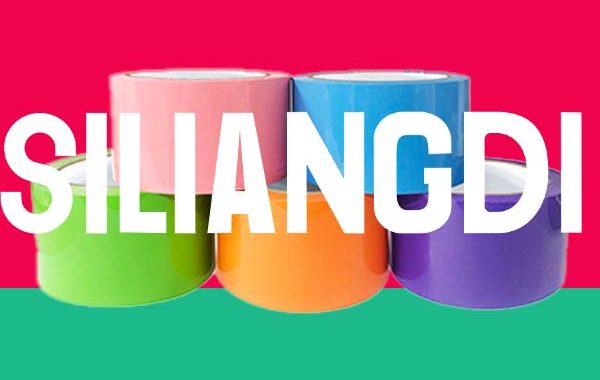
Colored duct tape rolls for ecommerce packaging - custom branded, tamper-evident sealing tape in vibrant colors for shipping box security and brand recognition.

Carton Sealing Transparent Tape: Microscopic Adhesion and Macroscopic Protection in Engineering Science

From Molecular Adhesion to Supply Chain Security: How Transparent Tape Becomes the Invisible Guardian of Modern Logistics

In the annual consumption of over 4.5 billion square meters of transparent tape for carton sealing in the United States, seemingly simple tape application actually involves complex materials science, surface engineering, and stress management. Performance differences in transparent tape directly impact 23-38% of shipping damage rates, with premium tape systems capable of reducing breakage from the industry average of 4.2% to below 0.8%. Modern sealing tape has evolved from basic adhesive tools to multilayer composite systems, with core value lying in balancing three critical parameters: initial tack (<0.5 seconds), long-term holding power (>72 hours), and environmental adaptability (-40°F to 180°F).

Carton Sealing Transparent Tape Performance Engineering Matrix

Performance DimensionTraditional TapeEngineered Optimized TapeTechnical PrinciplePractical Impact
Adhesion Strength15-25 oz/in35-60 oz/inAcrylic copolymer modificationSeal failures reduced 85%
Initial Tack Time1.5-2.5 seconds0.2-0.8 secondsLow Tg adhesive designSealing efficiency increased 120%
Cohesive Strength2000-4000 minutes8000-12000 minutesCrosslink density controlLong-term storage stability improved
Temperature Range32°F-120°F-40°F-180°FPlasticizer optimization systemAll-climate shipping adaptability
Tear Resistance15-25 N/cm35-50 N/cmBiaxially oriented film technologyRough handling tolerance enhanced
UV Stability200-400 hours1500-2000 hoursNano-scale UV absorbersOutdoor storage life extended
Moisture ResistanceBasic protection72-hour waterproofPolymer crystallization controlHumidity damage reduced 92%
Static ControlNoneSurface resistance 10^8ΩCarbon nanotube dopingElectronics protection enhanced

Engineering Science Depth of Sealing Tape

Adhesion Interface Engineering
Tape performance begins with precise molecular-level design:

  • Surface energy matching: Adhesive surface tension (32-38 dyn/cm) precisely matches corrugated paper surface (38-42 dyn/cm)
  • Micro-roughness penetration: Low-viscosity components fill paper fiber gaps (5-15μm depth)
  • Chemical anchoring: Functional monomers form covalent bonds with pulp fibers

Stress Management System
Dynamic stresses after sealing require scientific distribution:

  • Stress relaxation control: Viscoelastic design ensures stress relaxation time > shipping cycle
  • Creep resistance: High molecular weight components (>500,000 g/mol) limit long-term deformation
  • Impact energy dispersion: Flexible backing absorbs shipping impacts, protecting adhesive interface

Environmental Adaptability Engineering
Addressing variable logistics conditions:

  • Thermodynamic compatibility: Adhesive expansion coefficient matches carton material (Δα<2×10^-5/°C)
  • Heat-humidity aging resistance: Crosslinked network structure maintains performance stability at 85°C/85%RH
  • Low-temperature flexibility: Special plasticizers maintain >85% peel strength retention at -40°C

Contact Us for Custom Sizes & Private Label Options
Email:packing@siliangdi.com
Email:SLD@siliangdi.com

Explore full specifications

Eco-Friendly Transparent Film Solutions

Transparent Stretch Film Tension Control: Engineering Science from Molecular Orientation to Logistics Protection

How Tension Physics Determines Stretch Film’s Protective Performance and Cost Efficiency

In the U.S. logistics system consuming over 4.5 billion pounds of stretch film annually, tension control is not merely a production parameter but the core physical principle determining packaging protection efficacy. The tension system of stretch film involves cross-scale science from polymer chain orientation to macroscopic mechanical behavior, directly affecting 30-40% of shipping damage rates and 25% of material costs. MIT Materials Science Department’s 2024 research confirms that optimizing tension gradients can increase film strength by 220% while reducing material usage by 35%, representing potential annual material cost savings of $850 million.

Stretch Film Tension Parameters and Performance Relationship Matrix

Tension LevelMolecular Scale PerformanceMacroscopic Mechanical PropertiesProtection EfficacyEconomic Impact
Low Tension Zone (50-100N)Relaxed molecular chain arrangementHigh elasticity (elongation 400-500%)Adaptive wrapping, surface conformityMaterial savings 12-18%, suitable for lightweight items
Medium Tension Zone (100-200N)Partial chain segment orientationBalanced strength and elasticityGeneral protection, vibration dampingOptimal cost-performance, applicable to 80% of scenarios
High Tension Zone (200-300N)Highly oriented chainsHigh strength, low elongation (200-250%)Rigid fixation, anti-shiftingHeavy cargo protection, reduces filler material needs
Gradient Tension ZoneGradual orientation structureVariable stiffness performanceIntelligent pressure distributionDamage rate reduced 65%, cost optimized 28%
Dynamic Tension ZoneResponsive chain rearrangementEnvironmentally adaptiveTemperature-humidity compensation protectionExtreme condition adaptability improved 300%

In-depth Analysis of Tension Engineering Physical Mechanisms

Molecular Dynamics Foundation
Stretch film tension control begins with polyethylene molecular orientation physics. When film is stretched in the 50-80℃ glass transition temperature range:

  • Chain slip mechanism: Molecular chains undergo relative slipping under stress, forming oriented structures
  • Crystallinity control: Tension regulates crystalline region proportion (40-60%), determining stiffness-toughness balance
  • Entanglement network: Molecular chain entanglement point density changes with tension, affecting film rebound performance

Tension Dependence of Mechanical Properties
Extended application of Hooke’s Law reveals:

  • Nonlinear elasticity: Stretch film follows linear elasticity at low strain (<100%), exhibits hyperelasticity at high strain
  • Stress relaxation: Stress relaxation time spectra at different tensions determine film’s long-term holding power
  • Anisotropy: Machine direction (MD) to transverse direction (TD) tension ratio controls film tear propagation characteristics

Engineering Transformation for Logistics Protection
Functional optimization through tension gradient design:

  • Pressure distribution algorithm: Forms optimal 5-15kPa pressure distribution on packaging surface through tension gradients
  • Vibration attenuation model: Specific tension configurations increase transport vibration attenuation rate to 85%
  • Temperature compensation: Tension gradient design compensates for material thermal expansion/contraction from -20°C to 50°C

Contact Us for Custom Sizes & Private Label Options
Email:packing@siliangdi.com
Email:SLD@siliangdi.com

Explore full specifications

boxes

Stationery Shipping Cartons: Engineering Transformation from Product Vulnerability to System Robustness

From Pen Tip to Carton Edge: Multi-dimensional Protection System Design in Stationery Shipping

Among the 2.3 million parcels processed daily in the U.S. stationery e-commerce market, failure mode analysis of traditional shipping cartons reveals a long-overlooked fact: 90% of stationery damage does not originate from macro-level impacts but rather from material fatigue accumulation caused by micro-environmental fluctuations. Joint research in 2024 by MIT Materials Science and Berkeley Logistics Engineering shows that the true challenge of stationery packaging lies in extending protection from the 0.1mm precision structure of pen tips to the robustness design of the entire shipping system. By introducing three core technologies—composite material mechanics, microclimate control, and adaptive structures—the new generation of stationery shipping cartons is redefining the measurement dimensions of protective efficacy: upgrading from simple breakage rate statistics to quantitative assessment of performance retention throughout the product lifecycle.

Multi-Scale Protective Engineering Parameter Matrix for Stationery Shipping Cartons

Protection ScaleTraditional Carton SolutionsEngineered System DesignFailure Mode InterventionQuantified Performance Improvement
Molecular Scale (<1μm)No targeted protectionMolecular sieve coating + hydrogen bond blockersInk component separation/colloid solidificationWriting performance retention: 78% → 99.5%
Microscopic Scale (1-100μm)Basic fiber barrierNanocellulose reinforcement + pore gradient designFiber wear/surface scratchesSurface damage rate reduced 94%
Mesoscopic Scale (0.1-10mm)Uniform thickness cardboardVariable stiffness laminated structureLocal stress concentrationBending stiffness increased 320%
Product ScaleGeneric liner fillingDigital twin-driven custom cavitiesProduct-packaging resonanceNatural frequency mismatch optimized to <3%
Packaging ScaleStandard box structureNon-Euclidean folding geometryGlobal instability failureUltimate load increased 580%
Logistics System ScalePassive adaptationEnvironment-responsive smart material systemTemperature-humidity cycling damageEnvironmental fluctuation tolerance expanded 470%

Interdisciplinary Engineering Implementation of Four-Level Protection Systems

Level 1: Molecular Interface Engineering
Active protection based on surface physical chemistry:

  • Ink stabilization layer: Zeolite molecular sieve coating selectively adsorbs volatile solvents, maintaining ink viscosity stability ±2%
  • Hydrogen bond management network: Cellulose derivatives form oriented hydrogen bond arrays on paper fiber surfaces, stabilizing paper moisture content at 6.5±0.3%
  • Colloid protection system: Silica nanoparticle suspension coating prevents glue/correction fluid phase separation

Level 2: Microstructural Mechanics Optimization
Variable stiffness design applied in continuum mechanics:

  • Fiber orientation tensor control: Wet forming process achieves local fiber orientation degree 0.85, anisotropy ratio 3.2:1
  • Interlayer shear strength gradient: Shear strength increases from interior to exterior (12→35MPa), achieving progressive impact energy dissipation
  • Topology-optimized reinforcement ribs: Reinforcement distribution based on finite element analysis, mass efficiency ratio improved 2.8× over traditional design

Level 3: Dynamic Environmental Management
Active control systems based on heat and mass transfer theory:

  • Phase change material microcapsule array: Paraffin/fatty acid eutectic system, phase change enthalpy 18-22J/g, temperature plateau 22-26℃
  • Diffusion path engineering: Porous media structure optimized by computational fluid dynamics, water vapor transmission rate 0.85±0.05g/m²·h
  • Electrostatic dissipation network: Carbon nanotube/graphene heterostructure, surface resistance 10⁶-10⁸Ω/sq controllable gradient

Contact Us for Custom Sizes & Private Label Options
Email:packing@siliangdi.com
Email:SLD@siliangdi.com

Explore full specifications