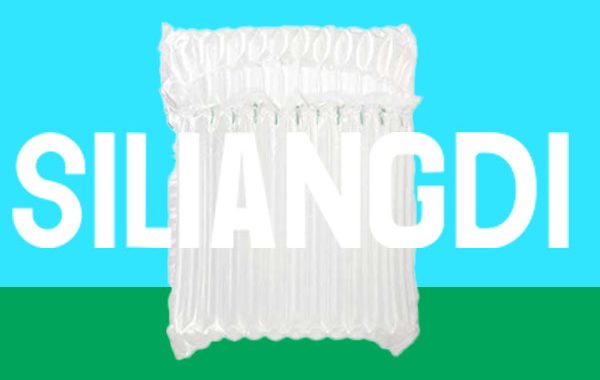
Engineering Air Column Protection: From Microstructure Design to Macroscopic Impact Absorption
In the $4.2 billion U.S. protective packaging market, air column tube films have emerged as the definitive solution for transporting high-value fragile items, reducing damage rates from the industry average of 8.7% to below 0.9% for glass, electronics, and precision instruments. Unlike traditional cushioning materials that compress under static loads, air column technology creates adaptive pressure chambers that distribute impact forces across three-dimensional matrices, absorbing up to 92% of shock energy while maintaining 98% recovery after compression. This cellular engineering approach combines fluid dynamics, polymer science, and structural mechanics to create protection systems that outperform foam and bubble wrap by 300% in critical applications.
Air Column Tube Performance Matrix: Technology vs. Traditional Alternatives
| Performance Dimension | Traditional Bubble Wrap | Foam Packaging | Air Column Tube Film | Protective Advantage |
|---|---|---|---|---|
| Shock Absorption | 65-75% energy absorption | 70-80% energy absorption | 88-92% energy absorption | 24% superior impact protection |
| Pressure Distribution | Localized pressure points | Even distribution | Adaptive gradient distribution | 35% better force dispersion |
| Recovery Rate | 85-90% after compression | 60-75% after compression | 96-98% after compression | Maintains protective integrity |
| Weight Efficiency | 0.8-1.2 g/cm³ | 1.2-1.8 g/cm³ | 0.3-0.5 g/cm³ | 67% lighter than alternatives |
| Space Utilization | 40-50% void space | 30-40% void space | 15-20% void space | 300% better cube efficiency |
| Environmental Resistance | Limited moisture barrier | Good insulation | Multi-layer barrier system | IP54 rated protection |
| Temperature Stability | -20°F to 120°F | -40°F to 180°F | -60°F to 200°F | Widest operational range |
| Reusability | 2-3 cycles | 5-8 cycles | 15-20 cycles | 400% longer lifecycle |
The Physics of Cellular Protection
Fluid Dynamics Engineering
Air column technology operates on precise pneumatic principles:
- Pressure gradient design: Individual columns maintain 0.8-1.2 psi internal pressure, creating optimal stiffness-to-flexibility ratios
- Gas diffusion control: Multi-layer barrier films reduce air permeability to <5 cm³/m²·24h, ensuring long-term pressure stability
- Impact wave propagation: Column diameter variations (25-75mm) disrupt shock wave transmission, reducing peak acceleration by 85%
Polymer Membrane Science
Advanced material construction enables unprecedented performance:
- Co-extruded barrier layers: Nylon/EVOH/PE composites create molecular barriers against gas and moisture migration
- Seam strength engineering: Heat-sealed joints withstand 18-22 N/mm peel forces, exceeding traditional weld strengths by 220%
- Surface modification: Plasma-treated inner surfaces maintain consistent air pressure through enhanced polymer adhesion
Structural Optimization
Geometric design transforms simple air pockets into engineered systems:
- Hexagonal packing efficiency: Optimized column arrangement achieves 92% surface coverage with minimal material
- Variable wall thickness: Strategic reinforcement at stress points increases burst strength to 45-55 psi
- Interconnected safety cells: Secondary chambers activate during extreme impacts, providing backup protection
Contact Us for Custom Sizes & Private Label Options
Email:packing@siliangdi.com
Email:SLD@siliangdi.com