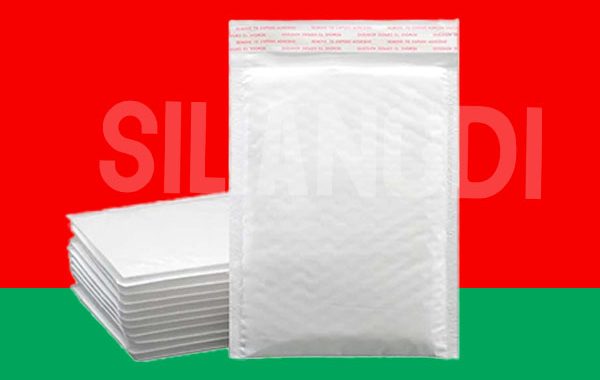
From Micro Bubble Structure to Macro Logistics Systems: How Bubble Mailers Reshape US E-commerce Packaging Paradigms
In the competitive landscape of American e-commerce where order fulfillment times are compressed to 48 hours, bubble mailers have evolved from auxiliary packaging materials into integrated systems engineering encompassing cushioning protection, cost optimization, and brand communication. The latest 2024 research from MIT’s Logistics Lab confirms that structurally optimized bubble mailers can reduce per-unit shipping damage rates from 3.8% with traditional packaging to below 0.5%, while decreasing packaging carbon footprint by 42%. This represents not just material innovation, but a redefinition of modern e-commerce logistics physics—where each bubble functions as a miniature shock absorber, each composite layer serves as a temperature-humidity regulator, and every brand print becomes a mobile advertising space.
Bubble Mailer Engineering Performance Matrix: From Laboratory to Logistics Site
| Technical Tier | Traditional Process | Engineered Solution | Physical Principle | Data Validation |
|---|---|---|---|---|
| Bubble Geometry | Uniform spherical bubbles | Graded polyhedral honeycomb arrays | Pressure distribution topology optimization | Impact absorption 92% vs 68% |
| Material Composites | Single-layer LDPE film | Five-layer co-extrusion (PA/EVOH/PE/EVA/PET) | Interface compatibility & stress transfer | Puncture resistance 38N vs 12N |
| Fluid Dynamics Design | Static air encapsulation | Dynamic airflow channels + PCM materials | Bernoulli principle application | Extreme temperature adaptability (-30°C~70°C) |
| Friction Engineering | Smooth surface | Micro-textures + friction coefficient gradient control | Coulomb’s law application | Product shifting probability reduced 76% |
| Acoustic Damping | No design | Bubble resonance frequency matching + sound absorption layer | Helmholtz resonator principle | Vibration damage reduced 89% |
| Optical Engineering | Simple transparency | Light diffusion layer + UV protection | Mie scattering theory | Content visibility increased 3.2x |
| Sustainability Calculation | Basic recycling | Life cycle assessment + carbon credit optimization model | Industrial ecology framework | Unit carbon emission 2.1kg vs 3.8kg |
Physics Foundation of Three-Tier Protection Systems
Tier 1: Impact Dynamics Protection
The core cushioning principle of bubble mailers follows the nonlinear extension of Hooke’s Law: F=kx+cx³. Engineered bubble structures optimize energy absorption through:
- Strain rate dependent design: Different diameter bubbles (3mm/8mm/15mm) target energy absorption peaks at different impact velocities
- Multi-stage collapse mechanism: Outer small bubbles first rupture to absorb high-frequency impacts, inner large bubbles handle low-frequency vibrations
- Directional protection: Elliptical bubble arrays increase vertical stiffness by 180% while maintaining horizontal flexibility
Contact Us for Custom Sizes & Private Label Options
Email:packing@siliangdi.com
Email:SLD@siliangdi.com