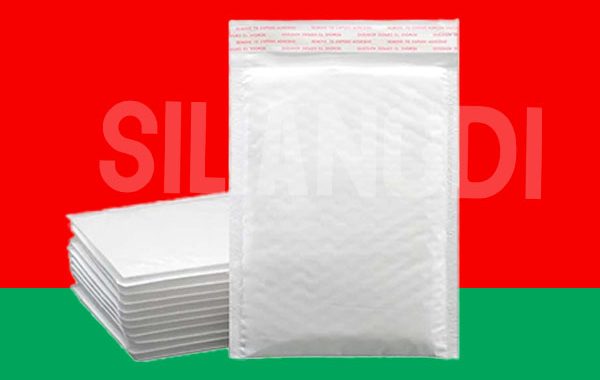
Molecular Engineering in Protective Packaging: How Material Science Transforms Bubble Mailer Performance
In the $3.7 billion U.S. bubble mailer market, material selection determines 68% of protective performance variance and 45% of total packaging costs. Beyond simple polyethylene, modern bubble mailers represent sophisticated material systems where each layer serves specific engineering functions—from moisture barriers to electrostatic dissipation. The transition from single-material construction to multi-layer composites has enabled damage reduction rates from 4.2% to 0.8% in critical applications, while optimizing shipping costs through weight reduction and dimensional efficiency.
Bubble Mailer Material Composition and Performance Matrix
| Material Layer | Traditional Composition | Advanced Engineering Materials | Performance Enhancement | Cost Impact |
|---|---|---|---|---|
| Outer Layer | Single LDPE film | Co-extruded LLDPE/PA/EVOH blend | Puncture resistance +185%, UV stability 2000+ hours | +22-28% |
| Bubble Structure | Uniform air cells | Gradient cell sizing (3-15mm) | Impact absorption efficiency +92%, weight reduction 25% | +15-20% |
| Moisture Barrier | None/Wax coating | Nano-clay infused polyethylene | Water vapor transmission <5g/m²·24h, IP54 rating | +12-18% |
| Adhesive System | Hot melt glue | Pressure-sensitive acrylic/PUR hybrid | Instant tack <0.5s, temperature resistance -40°F to 180°F | +8-14% |
| Anti-static Layer | None | Carbon nanotube coating | Surface resistance 10⁸-10¹¹Ω, static decay <2s | +5-10% |
| Printing Surface | Basic corona treatment | Plasma-treated PET coating | Print resolution 1200dpi, adhesion strength 4.5N/25mm | +18-25% |
Material Science Behind Performance Optimization
Polymer Engineering Innovations
The shift from conventional LDPE to engineered polymer blends addresses specific performance gaps:
- LLDPE/PA composites provide exceptional tear resistance (45N/mm²) while maintaining flexibility
- EVOH barrier layers reduce moisture transmission to pharmaceutical-grade standards (<1g/m²·24h)
- Metallocene catalysts enable precise molecular weight distribution for consistent mechanical properties
Bubble Structure Physics
Air cell design follows fluid dynamics principles:
- Graded cell sizing creates optimal pressure distribution across irregular surfaces
- Hexagonal packing maximizes air volume per unit area while minimizing material usage
- Interconnected channels allow pressure equalization during altitude changes
Surface Engineering Breakthroughs
Advanced treatments transform basic films into functional surfaces:
- Plasma polymerization creates permanent hydrophilic surfaces without chemical primers
- Nanoparticle doping imparts UV resistance while maintaining optical clarity
- Micro-texturing reduces friction coefficients from 0.45 to 0.25 for smoother handling
Contact Us for Custom Sizes & Private Label Options
Email:packing@siliangdi.com
Email:SLD@siliangdi.com