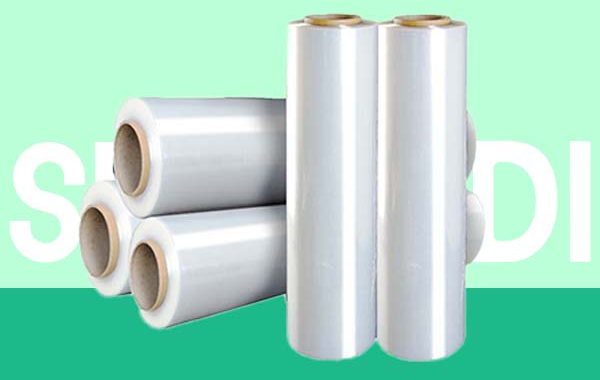
Pallet Stretch Film for Export: Engineering Solutions to Prevent Cargo Damage in Transit
In global supply chain systems, export packaging carries strategic significance far beyond traditional perceptions. As the primary defense line for palletized cargo protection, the technical selection of transparent stretch film directly impacts international logistics costs, cargo safety, and brand reputation. Unlike conventional packaging approaches, modern export-grade stretch film should be regarded as a dynamic protective engineering system, requiring precise balance across materials science, logistics engineering, and risk management.
| Engineering Parameter | Export-Grade Standard | Regular Industrial Grade | Strategic Value Analysis |
|---|---|---|---|
| Load Retention (60 days) | ≥88% (ASTM D4649) | ≤45% | Ensures cargo maintains original stability at any global port, eliminating last-mile risks |
| Dynamic Puncture Resistance | ≥650g (3-layer co-extrusion) | ≤350g | Withstands “micro-puncture accumulation” from carton corners during continuous ocean vibration |
| UV Resistance Rating | 1000h QUV-B tested | Uncertified | Addresses photo-degradation during deck transport and port storage, maintaining全程performance |
| Temperature Tolerance Range | -35°C to 80°C | -15°C to 60°C | Adapts to full climate coverage from Arctic to equatorial shipping routes |
| Thickness Variation Coefficient | ≤3.5% | ≥8% | Ensures stable automated wrapping system operation at overseas facilities, reducing maintenance costs |
Materials Engineering Analysis:
Premium export-grade films employ five-layer micro-coextrusion technology, with each layer precisely controlled at 0.5-2 microns: surface UV-resistant改性layer, secondary weather-stable layer, core mechanical strength layer, fourth adhesive regulation layer, and inner low-migration safety layer. This nano-scale structural design effectively counteracts the “container hygrothermal coupling effect” unique to ocean shipping, maintaining molecular chain stability in high-temperature, high-humidity environments to prevent tension relaxation.
Supply Chain Compliance Strategy:
U.S.-exporting enterprises must establish multi-tier compliance architecture. The foundation requires FDA 21 CFR 177.1520 food-contact compliance; the intermediate layer meets CPSC heavy metal restrictions; the strategic layer adapts to California Proposition 65 and EPA environmental standards. Intelligent films can integrate RFID labeling for complete digital traceability from Chinese factories to American warehouses.
ROI Reconstruction Model:
Based on data from multinational corporations we serve, engineering-grade stretch film reduces ocean cargo damage by 0.8-1.2 percentage points—alone covering annual packaging upgrade costs. More critically, it decreases destination restacking labor by 85%, shortens customs clearance by 40%, and lowers customer claims to one-third industry averages. These hidden benefits are systematically undervalued in traditional procurement decisions.
Contact Us for Custom Sizes & Private Label Options
Email:packing@siliangdi.com
Email:SLD@siliangdi.com